

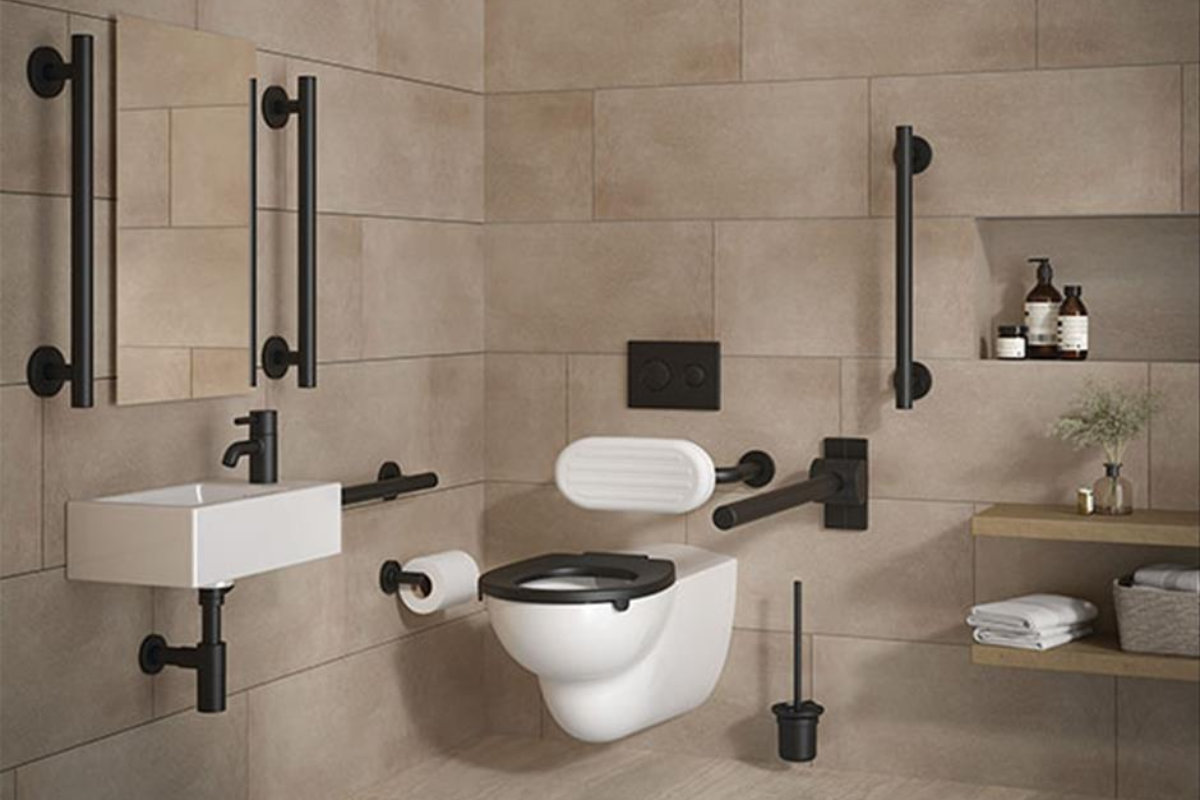
An in-depth article by Armitage Shanks on how we design commercial washroom products that look good while meeting accessibility regulations has appeared in the popular publication Architects’ Data File. An excerpt can be found below, with a link to the full article at the bottom.
Marrying accessibility and aesthetics
Designing commercial washrooms that are accessible to everyone begins with a clear understanding of the regulatory landscape. In the UK, Approved Document M of the Building Regulations, supplemented by BS8300-2:2018 and the Equality Act 2010, sets the minimum standards to ensure washrooms can be used safely and independently by people of all abilities. These regulations cover a broad range of considerations, including minimum circulation spaces, the positioning and height of sanitaryware, grab rails, and the need for tactile and visual contrasts.
The inclusion of visual accessibility requirements, such as the Light Reflectance Value (LRV) standards, is particularly important. It ensures that grab rails, toilet seats, and other fittings stand out sufficiently from their background surfaces to aid users with impaired vision. These precise standards are essential to creating spaces that are not only compliant but genuinely usable by all.
For architects, these regulations don’t just form the technical foundation but represent the starting point of accessible washroom design and ultimately understanding how to translate compliance into spatial and aesthetic washroom design.
You can read the full article via the link below.