

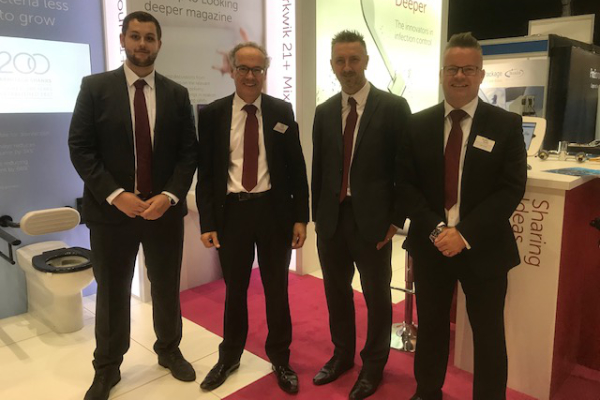
In our latest article looking at the roles of teams and individuals at Ideal Standard, we speak to Liam Ansell, Contract Sales Manager in the Non-Residential Team. Liam is pictured above, to the right.
Winning a specification and securing an order can often take two or three years; five or even ten plus for the biggest projects.
From sports stadia to office blocks to schools to hospitals, every project requires constant contact over time to win and retain the specification, often through rocky periods, and get it over the finish line.
For Liam Ansell, this is the most satisfying part of his job.
He said: “One of the most enjoyable things about the role is the diverse direction a project within non-res can take.
“You have to work with many different influencers involved in a project, especially the one who is making the ultimate decisions.
“Hopefully this leads to winning a project and there’s a satisfaction in knowing you have worked hard with other people in the business, often over a long period of time, to get that success.”
In his Contract Sales Manager role, Liam covers the north west, with an average of 320 projects being tracked at any one time.
Emphasis is given to the top 50 to ensure the team are engaging with main contractors, plumbing contractors and merchants.
He works closely with our Specification Managers, who will have got involved with the architects at an earlier stage in the development, and the Business Support Team, who provide invaluable support.
This results in a “cradle to grave” process on those projects.
Liam’s other responsibilities include head office main contractor negotiations with companies we have trading agreements with, such as Kier Construction, Morgan Sindall and Wates Construction.
He looks after the Procure 22 Health Framework which has six main contractors building small-to-medium-sized health projects in England, partnering with Wolseley.
He is also supporting members of the specification sales team as Field Sales Manager for the north during maternity cover.
Liam joined the business on a Youth Training Scheme in August 1985 at Armitage and got his first permanent job in production planning on 6 May 1986. Other roles have included sales office administrator, customer trainer and with Ideal Standard’s showering brand Trevi Showers.
He is part of the Non-Residential sales team of Specification Managers who report to a Field Sales Manager and Contract Sales Managers who report to Tim Chappell, Director of the Non Residential Channel.
So what does the role actually involve?
“I’m constantly engaging with customers’ project teams at their offices or on site to assist with getting the correct and compliant products and fundamentally building relationships which will encourage one of our key focuses – taking share from competitors.
“We have to ensure the CRM system is updated to have correct milestones, chance of success and product requirements to allow other areas of our business to forecast and track the project, allowing engagement with decision makers at key moments to get the best outcome.
“Then there’s liaising with Business Support to make pricing decisions which can be dependent on stage of the project, the specification, customer or framework and also supporting my colleagues within the specification team with day to day issues and regular dialogue as part of the maternity cover.”
Married for 27 years to Michelle, the couple have kids Jack, 24, Harry, 20, and Sally, 17, live in Rugeley and enjoy weekends away caravanning, for which Liam apologises.
Liam says the attributes needed to be successful in the role are commercial awareness, a personable demeanour, positivity, organisation and professionalism.
And his proudest achievement?
Liam said: “This has to be tendering and winning the solus supply of sanitaryware to the Procure 21+ framework back in 2013, which has now developed into Procure 22, running until 2022.
“What I like about this is that the company has been recognised as a leader within that framework, meaning that others aspire to achieve the professional behaviours required within it and we are held up as an example to others by the framework principles.”