

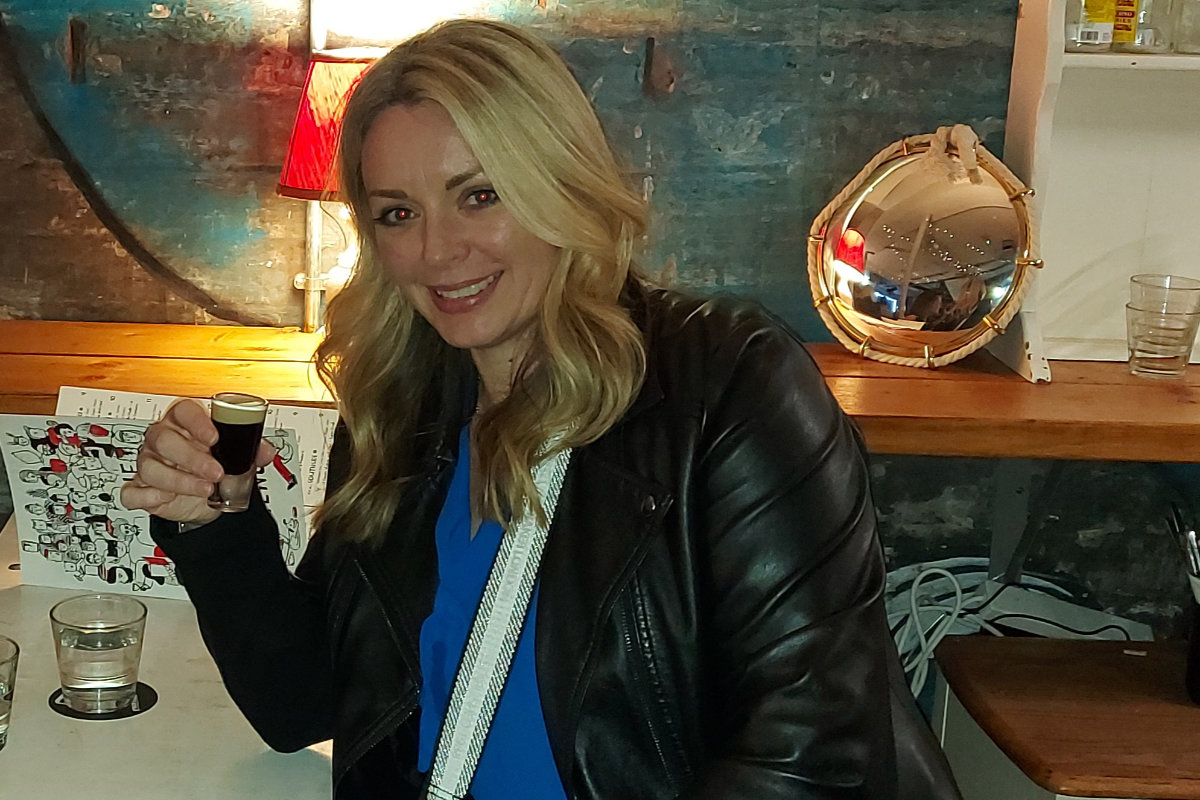
Commercial Finance Business Partner Katy Thorpe went to university without a plan and not knowing her future lay in accountancy. In the latest of our career stories, Katy tells us how she came to work for Ideal Standard, how developing a broad knowledge of the business proved useful and how incremental achievements have helped her progress and kept her motivated.
Tell us how you came to work for Ideal Standard
When I was a young child, if anyone asked me what I wanted to be when I grew up, my standard answer was a bank manager, which fitted as I always knew how every penny of my pocket money was either spent or saved. Back in the 80s, roles like finance business partner didn’t exist: the career landscape of finance roles was very different. When I left school, I was much less sure than my younger self about what I wanted to do for a career, so I chose A-levels in traditional academic subjects. I then went on to university at St John’s in York where I studied geography with management. Back then there were no tuition fees, so choosing to go to university with no real end game was a very different decision to nowadays, when it’s going to cost you the best part of £30k just to attend!
The idea of some sort of finance-based role was always in the back of my mind and in my second year at uni I had to do a work placement which I did at a local accountancy firm in Hull. I enjoyed it but still wasn’t 100% convinced. When I left university I started looking for a “real job” but without any real focus or a career in mind. I did, however, know I wanted to work in a big organisation – probably as a result of the time spent working at McDonald’s as a student and benefitting from the flexibility that came with it.
Initially I got a job at a debt collectors in the trace department, which basically meant playing detective by cold calling and trying to establish a new address for debtors who had absconded and thought they had left their debts behind. It wasn’t a pleasant experience as these people really didn’t want to be found and were not shy about telling you to “please leave me alone” in a not-so-polite way.
I survived 10 months and then I applied for a job I saw advertised in the local paper – to work at Ideal Standard – and exactly 23 years ago this week I started in customer care. I spent 18 months working answering phones, dealing with customer complaints and queries, and giving product advice. Then a job was advertised internally to work in accounts receivables, which I applied for. However, because I had no experience, the manager wasn’t prepared to give me a permanent role, so I sat tight in customer care, until a few months later a role was advertised to work in the marketing department doing all the finance admin and budget reporting and planning. I applied and the recruiting manager for that role decided to give me a chance and my career in finance began.
How did you start working towards qualifying as an accountant?
When I moved into the marketing role one of the conditions was to begin my professional exams. I chose to do a CIMA (Chartered Institute of Management Accountants) qualification and within a year I had passed the first level. It was at this point when the manager who had given me the chance to do the marketing role approached me to move into what was then the management accounts team and become a trainee accountant. This was when we had various factories around the UK which all reported the monthly results into our team so we could consolidate them and then submit to HQ in Brussels. It was interesting times and I got involved in all sorts of different things, from doing stock takes to standard costing to headcount reporting to name a few, all the while still continuing to study and progress through my CIMA exams.
At the point I sat and subsequently passed the final level of my exams, I got promoted to inventory accountant and also met my now husband Gary, who also worked at Ideal Standard, and we got married in 2008. A huge change then followed in the structure of the business at group level and reporting lines were split into operations and commercial. Resulting from this there was a gradual change of focus on the work our department did. In 2010 – 10 years and 1 day after starting at Ideal Standard – I had my son George and when I returned from maternity leave the finance team in the UK had completely changed structure to reflect the new Group structure. This opened up different opportunities for me to get involved with and broaden my experience, including banking, cashflow forecasting and intercompany transactions.
In 2014 I had my daughter Emmeline and when I returned from maternity the department had once again changed and was now more recognisable as it is today – commercial finance. I changed role again to finance business partner to specification – residential and non-residential, a role which evolved a few times again due to the changing focus of the wider business, until four years ago when my then manager and our now current Finance Director Rachel Whittaker went on secondment to a group role and I was asked to lead the Commercial Finance Team for the UK.
When did you realise you wanted to work in finance?
Before I had applied for the job here, I used to go to the Job Centre in town in my lunch break. They had some funding and they offered me this psychometric test which involved me doing a three-hour exam plus a questionnaire about what type of work you would like to do. I remember coming out of it and being exhausted. The purpose being to identify what jobs might suit me based on my skills and preferences. It gave me 12 different career suggestions – 10 of them were finance-based – so it was fairly conclusive that I was made to do a finance role!
What do you think has helped you progress?
Building up networks and knowledge of the business are two things, definitely. I’ve done all sorts of different roles in finance but there’s a lot of other stuff I’ve covered over my time here. When I think right back to the start, when I was in customer care, we did some training where I did a day in the spares department, a day building shower enclosures – turns out I’m not great with a drill – and also a day in the quality assurance department. There was this guy who had been here forever and he took me on a tour of the Hull factory all the way through from the slip house (with the goldfish for those who remember) right through to the warehouse. It took over three hours but I was fascinated and I learned a lot. Things like that stick with you and helped me get an understanding for the business which I still find useful today. I’m always conscious of that.
Building up your knowledge of people in the business is essential too. You might have worked on a project with someone 10 years ago and hardly spoken to them since but you remember them when you need help from someone in their department and you have someone to go to. Building up your networks is important.
When I think back to the years I worked at McDonald’s as a student at the time it was only to fund my social life but with hindsight I see now it taught me about working in a team and working with the public, and gave me a whole load of transferable skills without me even realising.
What advice would you give to someone who is fairly new to the business?
Don’t be frightened to let people know about your aspirations. If you want opportunities to come your way, you have to put yourself out there and make it known you want to progress. Don’t shy away from trying new things or volunteering for different projects which might give you the chance to work with people across the business.
When I look at my career and my personal life, the common theme is that of achievement but it was only within the last few years I realised this. First my degree; my first job; getting a job that could be a career; passing my exams; meeting my husband; getting married; having children; running a team. Then there’s a number of different achievements I’ve had the opportunity to do while working here: I’ve run the London Marathon, done the National Three Peaks, the Yorkshire Three Peaks (due to Armitage Thanks) and more recently completed/survived a Tough Mudder, plus I’ve managed to not poison my colleagues with cakes and biscuits for various bake offs.
If I hadn’t applied for that job I wouldn’t be doing what I do now. I didn’t get the first job I applied for in finance and that has worked out well for me. If you get knocked back, there’s a reason for that. My second opportunity turned out to be a springboard for my career.
Don’t be shy. If an opportunity presents itself, go for it. What’s the worst that could happen?